
How Middle East Conflicts Are Shaking Up African Economies: What Citizens in Ghana, Nigeria, Kenya, and South Africa Need to Know
- orpmarketing
- Jun 16, 2025
- 4 min read

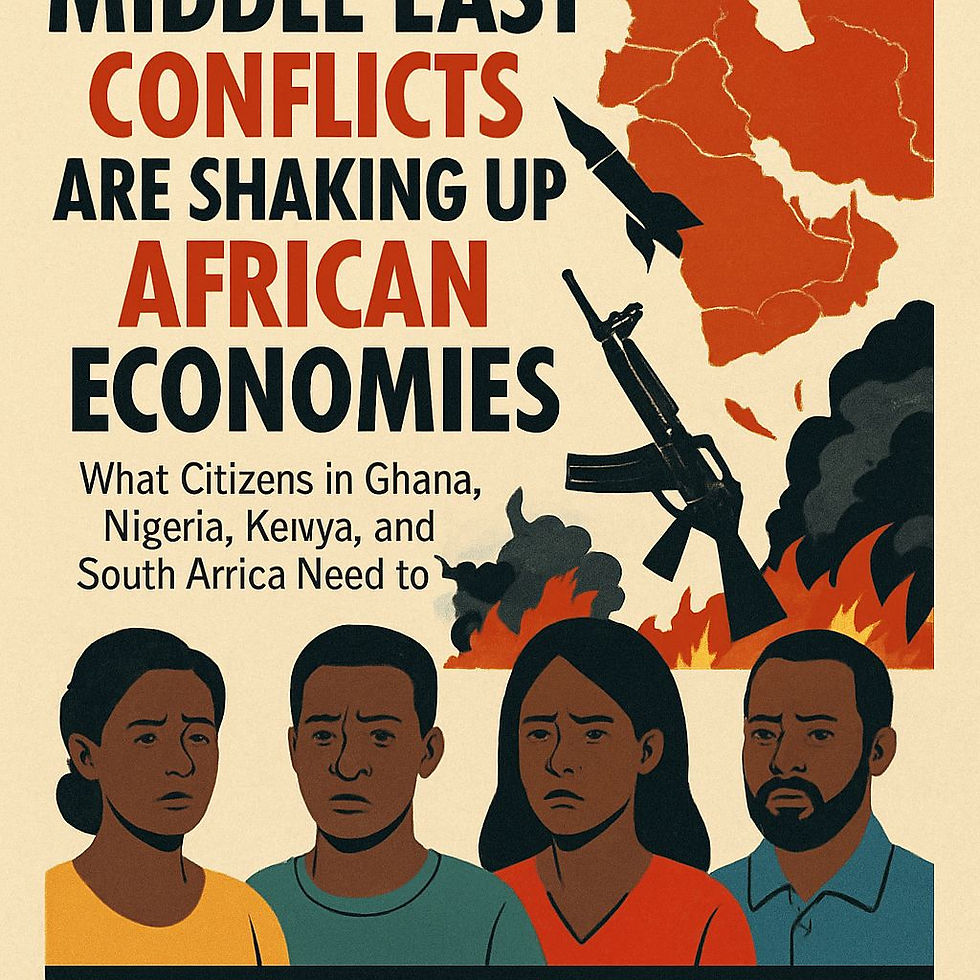
The Middle East is a mess right now. Between the escalating Israel-Iran tensions, Houthi attacks in the Red Sea, and broader regional instability, the ripple effects are hitting far beyond the Gulf. For African nations like Ghana, Nigeria, Kenya, and South Africa, these conflicts aren’t just news headlines—they’re economic headaches that could reshape daily life. Let’s dive into how these far-off battles are affecting these countries and what regular folks can do to brace themselves. Spoiler: it’s mostly about oil, trade, and tightening your belt.
The Economic Fallout
1. Ghana: Feeling the Fuel Pinch
Ghana’s economy is like a small boat in a stormy sea when oil prices spike. The country imports most of its crude oil, and with prices jumping 7–8% recently due to Middle East tensions, fuel costs are climbing fast. This trickles down to everything—transportation, food, even that trotro ride to work. Inflation was already hovering around 20% in mid-2024, and this could push it higher. Plus, Ghana’s ties to the U.S. and Middle Eastern investors mean any disruptions—like tightened U.S. travel bans or reduced foreign aid—could hurt. If you’re a student hoping to study abroad or a business owner eyeing Gulf partnerships, those plans might hit a snag.
2. Nigeria: Oil Boom or Bust?
Nigeria, Africa’s top oil producer, might seem like it’s sitting pretty. Higher oil prices could mean more revenue, right? Well, not so fast. The country’s refineries are barely functional, so it still imports refined fuel. When global prices soar, Nigerians feel it at the pump and in the market. The naira’s been on a rollercoaster, and Middle East instability could make foreign exchange even scarcer, driving up costs for imported goods. Add to that the risk of reduced remittances from Nigerians in the Gulf—over $20 billion annually—if conflict disrupts jobs there. It’s a mixed bag, and the average Lagosian might not feel the “oil boom” at all.
3. Kenya: Trade Routes and Tourism Take a Hit
Kenya’s economy thrives on trade and tourism, but Middle East conflicts are throwing a wrench in both. Houthi attacks in the Red Sea have disrupted shipping routes, delaying goods and jacking up costs for imports through Mombasa’s port. That means pricier electronics, clothes, and even maize flour. Tourism, a major forex earner, is also at risk. If travel advisories from Western allies tighten due to regional unrest, those safari bookings from Europe or the U.S. could dry up. Kenya’s shilling is already wobbly, and higher import costs could fuel inflation, which was around 5–6% in 2024 but could climb.
4. South Africa: The Regional Heavyweight Stumbles
South Africa, with its diversified economy, isn’t immune either. As a net oil importer, it’s facing the same fuel price hikes, which hit everything from manufacturing to grocery shelves. The rand, already volatile, could weaken further if global markets get jittery over Middle East chaos. South Africa’s trade with the Middle East—think agricultural exports or machinery imports—could slow if Gulf partners scale back. And let’s not forget the mining sector: global uncertainty often spooks investors, which could stall projects and jobs. For a country with unemployment above 30%, that’s a scary thought.
What’s Driving This?
The Middle East’s turmoil messes with Africa in a few big ways:
Oil Prices: Brent crude’s been volatile, hitting $80–$90 per barrel recently. Every dollar up means higher costs for African importers.
Trade Disruptions: Red Sea attacks by Houthi rebels have forced ships to reroute around the Cape of Good Hope, adding weeks and millions in costs.
Remittances and Aid: African workers in the Gulf send billions home. Conflict could cut those flows, and Western aid budgets might shift to Middle East crises.
Investor Confidence: Global markets hate uncertainty. Investors might pull back from African projects, especially in resource-heavy economies like Nigeria and South Africa.
What Can Citizens Do to Prepare?
Alright, so the world’s a bit chaotic, but you’re not helpless. Here’s how folks in Ghana, Nigeria, Kenya, and South Africa can get ready for what’s coming:
Budget for Higher CostsFuel and food prices are likely to creep up. Start tracking your spending now. Maybe skip that extra latte (or palm wine, depending on your vibe) and stock up on staples like rice or maize. In Ghana and Nigeria, where inflation’s already a beast, consider buying in bulk to lock in prices.
Diversify Income StreamsIf you rely on remittances from family in the Gulf, start exploring side hustles. Kenya’s gig economy—think freelance tech or delivery apps—could be a lifeline. In South Africa, small-scale entrepreneurship, like selling crafts or services, might cushion job market shocks.
Stay InformedKeep an eye on global news, but don’t panic. Check reliable sources like BBC Africa or Al Jazeera for updates on oil prices or trade disruptions. If you’re in Nigeria, follow local outlets like Punch for how government policies might respond. Knowledge is power.
Save in Stable CurrenciesThe cedi, naira, shilling, and rand are shaky when global markets wobble. If you can, save a bit in dollars or euros (legally, of course). Even small amounts can help when local currencies dip.
Support LocalImported goods will get pricier, so buy local where possible. In Kenya, support farmers at the local market. In South Africa, choose locally made products. It keeps money in the community and shields you from import cost spikes.
A Personal Note
I remember chatting with a friend in Accra last year about how fuel prices were already eating into his transport business. He started carpooling with neighbors to cut costs—a small move, but it helped. These conflicts feel distant, but their impact hits home. Whether you’re a student in Nairobi, a trader in Lagos, or a miner in Johannesburg, little adjustments now can make a big difference.
The Bottom Line
The Middle East’s fighting is like a stone dropped in a pond—the ripples reach Africa’s shores. Ghana, Nigeria, Kenya, and South Africa will feel the pinch through higher prices, disrupted trade, and shakier job markets. But citizens aren’t powerless. Budget wisely, stay informed, and lean on local solutions. Tough times don’t last forever, but being prepared can make them a lot less painful.
What do you think about these impacts? Got any tips for weathering economic storms? Drop a comment below and share this post to spread the word!


Comments