
The Global Bloodline: The History and Hidden Mechanics of Sibling Rivalries at the World Cup
- orpmarketing
- 2 minutes ago
- 3 min read

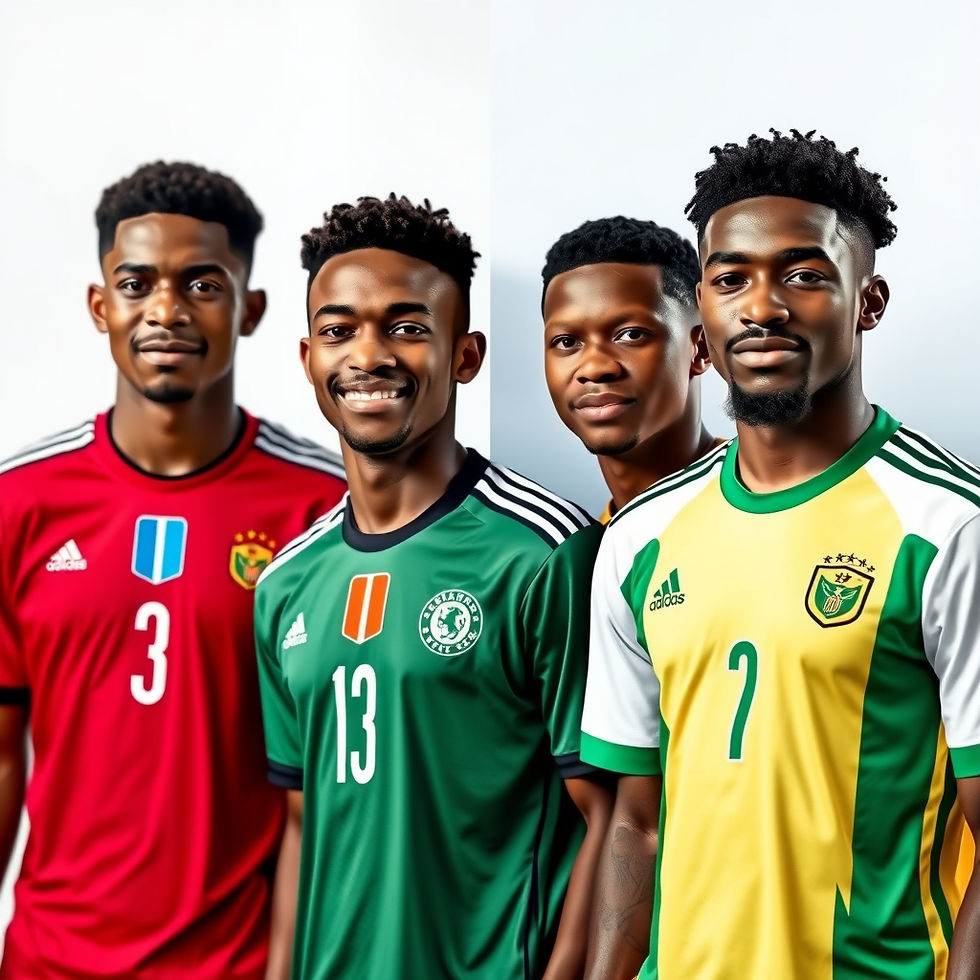
1. The History: This is Not a New Phenomenon
While it feels like a modern trend, the blueprint for splitting siblings across national lines was drawn over a decade ago.
The Boateng Brothers (2010 & 2014): The ultimate pioneers of this dynamic were Prince-Kevin Boateng (Ghana) and Jérôme Boateng (Germany). Born to a Ghanaian father in Berlin, Kevin chose to represent his ancestral home after a falling out with the German youth setup, while Jérôme stayed to win the 2014 World Cup with Germany. They famously faced each other in the group stages of both 2010 and 2014.
The Pogba Brothers: While Paul Pogba became a global icon winning the World Cup with France, his older twin brothers, Florentin and Mathias, proudly wore the colors of Guinea.
The Xhaka Brothers (Euro 2016): Granit Xhaka lined up for Switzerland, while his brother Taulant represented Albania on the European stage.
2. Why is Ghana Always in the Picture?
Ghana’s frequent appearance in these dual-heritage storylines is not a coincidence. It is driven by three major structural realities:
A. The "Diaspora Goldmine"
Ghana experienced massive waves of migration to Europe (specifically the UK, Germany, the Netherlands, and Spain) in the late 1980s and 1990s. The children of these migrants were born into elite European football academies (like Ajax for the Brobbey/Luckassen family, or Athletic Bilbao for the Williams brothers). Ghana's talent pool abroad is arguably one of the denseest and most technically gifted in Africa.
B. The GFA's Aggressive "Homecoming" Strategy
The Ghana Football Association (GFA) has mastered the art of the Nationality Switch. Recognizing the world-class training provided by European academies, the GFA actively pursues players who have represented European nations at the youth level but remain eligible for a senior switch under FIFA rules.
C. The Pull of the "Black Stars" Brand
Unlike some nations, the Ghanaian national team represents a massive cultural and commercial brand. For a player born in Spain or Holland, wearing the Black Stars jersey is seen as a badge of honor, a gateway to a massive, passionate fanbase, and a chance to play on a historic continent.
3. The Generational Gap: Why the Older Brother Often Chooses Africa
Look closely at the patterns—Jerôme Boateng was younger than Kevin-Prince. Nico Williams is 8 years younger than Iñaki. Brian Brobbey is younger than Derrick Luckassen. Why do the younger siblings stay in Europe while the older ones play for Africa?
The European Pipeline Advantage: The younger brother often benefits from the mistakes, guidance, and financial stability provided by the older brother's early career. As a result, the younger brother is frequently fast-tracked and heavily protected by European federations (like Spain capping Nico early to lock him down).
The Senior Shift: The older brother often spends years fighting through the highly competitive European system. If they don't break into the European senior team by age 24–26, African countries approach them with an irresistible offer: “Come and lead our attack at the World Cup right now.”
4. Who Stands to Benefit the Most?
Stakeholder | How They Win |
The Players | Dual Marketability: Nico Williams can sell sneakers in Madrid, while Iñaki secures massive endorsement deals across West Africa. They essentially dominate two entirely different commercial markets. |
The European Countries | Elite Retention: They retain the absolute highest tier of academy-produced talent (the "prodigies") without investing resources into the players' ancestral homelands. |
The African Countries | Free High-End Training: African federations get access to tactical, physical, and psychological traits taught at world-class European facilities—completely free of cost to the local federation. |
The Families | Guaranteed Pride: No matter who wins or loses the match, the parents win. Their lineage is validated on the global stage, ensuring that their family name becomes immortalized in football history. |
5. What the Future Looks Like
The 2026 World Cup proves that football identity is no longer binary. As globalization accelerates, we will see fewer players making "desperate" choices and more making highly strategic ones. African football is becoming more attractive, and as domestic infrastructure improves, the trend of dual-heritage players returning to their roots will shift from a "backup plan" to a primary ambition.
The sibling divide isn't about broken loyalty; it’s about a family expanding its footprint across the global game.


Comments